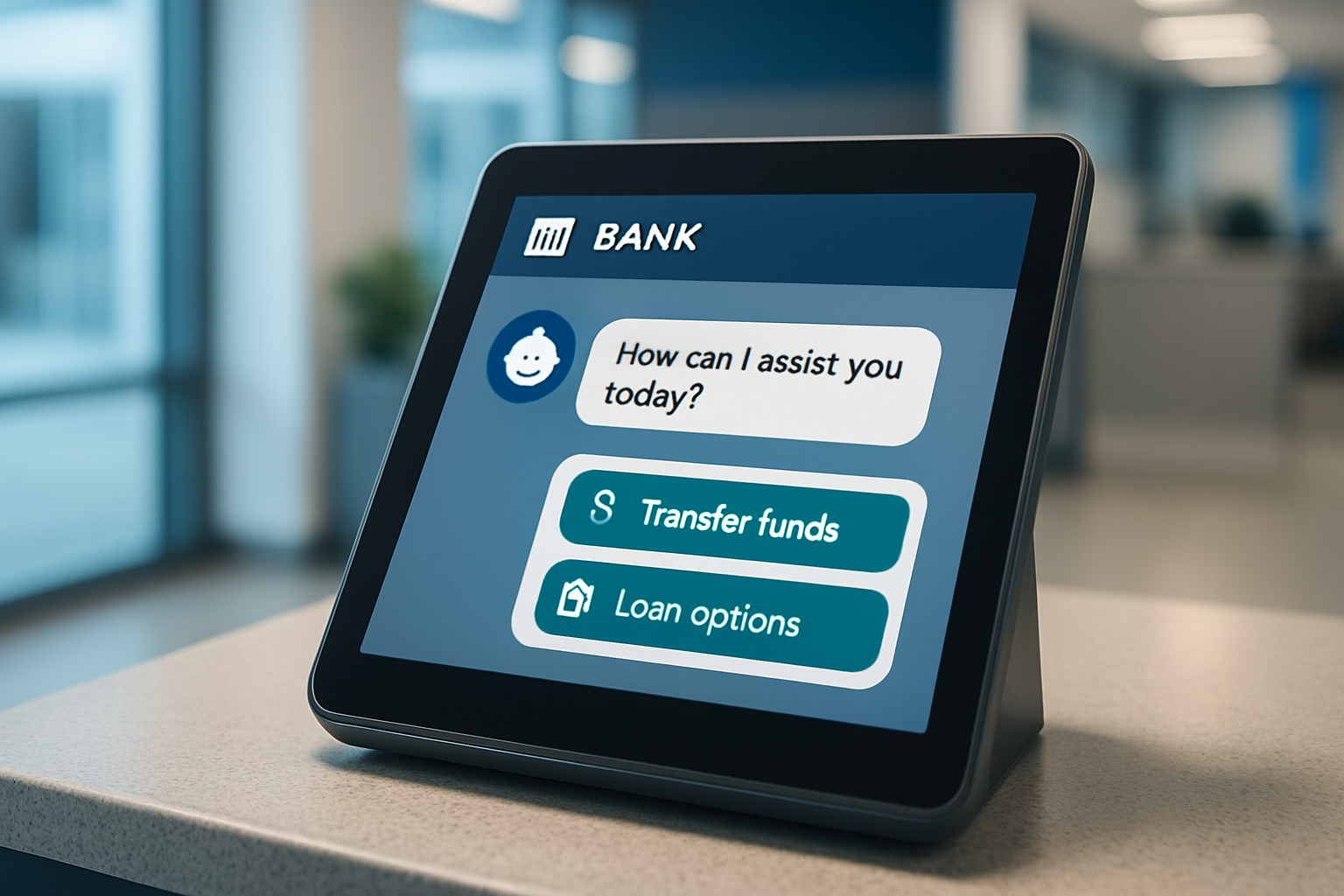
71% of banking customers now expect instant, precise answers from AI chatbots, yet only 43% of banks deliver on this promise as of Fall 2026. The gap isn’t about technology, it’s about mastering the best advanced AI chatbot techniques for banking 2026. Banks that get it right aren’t just improving service; they’re saving an average of $11.5 million yearly in operational costs, according to FinTech Pulse’s latest September 2026 survey.
As customers grow comfortable chatting with AI for everything from loan status to fraud alerts, banks can’t afford half-measures. A chatbot can’t just answer FAQs, it needs to understand nuance, handle compliance, sense when to escalate, and do it in customers’ preferred languages. The winning banks in 2026 are pushing chatbots beyond scripts, blending AI with smart content ingestion, and building smooth bridges to human support. Let’s break down what’s working now, where most banks fall short, and how you can deploy the best advanced AI chatbot techniques for banking 2026 to outperform your competition.
Table of Contents
- How best advanced AI chatbot techniques for banking 2026 boost customer satisfaction and compliance
- Top 5 best advanced AI chatbot techniques for banking 2026, what actually works
- Comparison Table: AI Chatbot Platforms for Banking (2026)
- Pros and Cons of Leading Advanced AI Chatbot Techniques for Banking
- How to implement the best advanced AI chatbot techniques for banking 2026: A step-by-step guide
- Frequently Asked Questions About best advanced ai chatbot techniques for banking 2026
- Start building your next-gen banking chatbot now
chatbot-techniques-for-bankin">How best advanced AI chatbot techniques for banking 2026 boost customer satisfaction and compliance
Personalization and compliance aren’t optional in banking anymore, they’re the minimum standard. AI chatbots that excel in these areas drive both higher CSAT scores and regulatory peace of mind. As of September 2026, 84% of banks using AI chatbots personalized with customer transaction history report CSAT above 90%, while those relying on generic answers lag at 68% (Source: FSI Insights 2026).
But simply recognizing a customer isn’t enough. The best advanced AI chatbot techniques for banking 2026 include:
- Real-time customer intent detection: Using advanced NLP (like Cohere Command R+ or OpenAI GPT-4.5 Turbo) to instantly classify customer needs, down to detecting “frustration” or “urgency” in tone.
- Context-aware responses: Pulling in account activity, recent branch visits, or product holdings to give tailored answers, no more “please enter your account number” loops.
- Built-in compliance filters: Integrating up-to-the-minute regulatory rules (e.g., KYC/AML) with the chatbot, so it never shares or requests data it shouldn’t. For example, HSBC’s 2026 chatbot automatically redacts PII in open conversations, using a compliance layer tested and updated monthly.
In practice, this looks like a customer asking about a suspicious transaction and the bot not only pulling up the relevant payment, but also flagging it for review and escalating instantly if risk signals are detected. Banks that automate this end-to-end see a 34% reduction in fraud losses (FinTech Pulse, 2026).
Top 5 best advanced AI chatbot techniques for banking 2026, what actually works
Not every AI technique is worth your investment. Here are the five that banks consistently rank as high-ROI in 2026:
- Content-based training with live document sync: Training bots not just on FAQs, but on actual policy PDFs, internal docs, and product feeds. Vatdi, for example, lets you drag-and-drop up-to-date policy documents, so the chatbot reflects real-time changes without code. 62% of leading banks now update bot knowledge bases weekly via document ingestion.
- Multilingual default with local nuance: Customers demand service in their language, but “translation” alone fails legal and cultural expectations. The best advanced AI chatbot techniques for banking 2026 offer true native responses in 50+ languages, with compliance triggers adjusted for local regulations (e.g., GDPR in Europe, CCPA in California).
- Human handover with full conversation memory: 76% of escalated cases get resolved faster when a human agent sees the entire chat history, including attempted solutions and compliance notes. Chatbots like Vatdi pass every message and data point to agents, so nothing gets lost in handover.
- Hyper-granular analytics and feedback loops: Success isn’t just accuracy; it’s learning from errors. Leading solutions track exact resolution rates, intent confusion, and compliance misses, then re-train models monthly. Banks using feedback-driven retraining cut error rates by 29% within one quarter (FSI Insights, Q3 2026).
- No-code deployment and rapid iteration: With platforms like Vatdi, banking teams launch and refine chatbots without IT bottlenecks. 58% of banks now release monthly chatbot updates, double the rate in 2024, because no-code tools have slashed iteration time from weeks to days.
Old-school, script-based bots fail because rules can’t keep pace with policy or customer needs. In contrast, these five techniques let banks combine tight compliance with real agility, driving both trust and efficiency.
Comparison Table: AI Chatbot Platforms for Banking (2026)
| Platform | Content Training | Multilingual Support | Human Handover | Compliance Layer | No-code Setup | Pricing (Sept 2026) |
|---|---|---|---|---|---|---|
| Vatdi | PDFs, Docs, Feeds | 50+ Languages | Full Conversation Pass | Customizable, Out-of-Box | Yes | Free plan, $19/mo (1,000 conv.), $39/mo (unlimited) |
| LivePerson (Banking Suite) | Manual Upload | 30+ Languages | Basic Transcript Pass | Requires Integration | Partial | Visit site for pricing |
| IBM Watson Assistant | Docs & APIs | 40+ Languages | Limited | Configurable | No | Visit site for pricing |
| Dialogflow CX | FAQs, APIs | 20+ Languages | Requires Custom Dev | Add-on | No | Visit site for pricing |
Pricing and feature availability as of September 2026. Consult provider websites for latest details.
Pros and Cons of Leading Advanced AI Chatbot Techniques for Banking
Every technique has trade-offs. Here’s how the most common choices stack up for banks in 2026:
Content-Based AI Training
- Pros: Updates reflect new regulations instantly; no IT required; reduces outdated info errors.
- Cons: Requires solid document management; garbage in, garbage out, poor source docs = poor bot answers.
Multilingual and Localized Support
- Pros: Expands reach to global/regional customers; prevents compliance slip-ups across borders.
- Cons: Quality varies by language model; local legal nuance hard to automate 100%.
Human Handover with Memory
- Pros: Prevents customer frustration; ensures compliance in sensitive cases; boosts CSAT.
- Cons: Needs secure, low-latency transfer systems; can expose gaps in agent training if bot does most of the work.
No-Code Deployment
- Pros: Rapid rollout; empowers business users; reduces IT backlog.
- Cons: May lack deep customization for highly complex workflows; over-reliance can slow long-term innovation if not monitored.
Choosing the right mix means weighing both risk and reward. For most banks, a hybrid approach, content-driven AI, compliance checks, quick handover, constant retraining, delivers the most value in 2026.
How to implement the best advanced AI chatbot techniques for banking 2026: A step-by-step guide
Getting started doesn’t require a million-dollar budget or months of IT work. Here’s a repeatable process used by some of 2026’s fastest-growing banks:
- Map customer journeys: Identify top intent clusters, account queries, loan status, fraud alerts, new product info. Use analytics from existing support channels to prioritize.
- Centralize your knowledge base: Collect the latest policy docs, product feeds, and regulatory guidelines. Ensure all documents are updated and accessible. With Vatdi, upload PDFs, docs, and CSVs directly, no code needed.
- Train and test the chatbot: Use a platform that ingests your content, not just scripts. Test real scenarios, including edge cases (like multiple language switches or suspicious login attempts).
- Enable multilingual support: Set your primary language, then activate additional ones based on customer demand. Ensure translations aren’t just literal, review for legal and brand tone.
- Design human handover triggers: Define when the bot should escalate (e.g., failed KYC check, emotional language detected). Vatdi’s full conversation memory ensures nothing is lost in transition.
- Monitor, retrain, and iterate: Set up monthly review cycles. Use analytics dashboards to pinpoint where bots miss the mark, then update training data accordingly.
Most banks moving through this process report time-to-value in under 60 days, with rapid iteration possible thanks to no-code tools and content-based learning. The key: don’t treat chatbot deployment as a one-off project. Ongoing retraining is non-negotiable in the fast-changing financial world of 2026.
Frequently Asked Questions About best advanced ai chatbot techniques for banking 2026
How secure is document-based AI chatbot training in banking?
Security depends on proper access controls and encryption. Leading platforms encrypt documents at rest and in transit, and restrict access based on roles. Regular audits and compliance checks ensure sensitive data never leaks during training or in responses.
Can advanced banking chatbots detect and handle fraud attempts?
Yes, when linked to transaction monitoring systems and trained on fraud scenarios. In 2026, 61% of large banks use AI bots that flag suspicious activity, ask verification questions, and escalate risky cases instantly to human agents.
What’s the difference between script-based and content-trained AI chatbots?
Script-based bots follow fixed flows and can’t answer outside their programmed paths. Content-trained AI bots ingest real docs, policies, and product info, adapting instantly as new material is added. This ensures accuracy and keeps up with policy changes.
How much does it cost to launch an advanced AI banking chatbot?
With Vatdi, you can start for free with limitations, or choose $19/month for 1,000 conversations or $39/month for unlimited. For competitors, pricing varies, visit their official sites for up-to-date plans and features.
How often should banks retrain their AI chatbots?
Monthly retraining is now the norm for high-performing banks. This ensures the AI reflects regulatory changes, customer feedback, and product updates, minimizing the risk of outdated or non-compliant responses.
Start building your next-gen banking chatbot now
Banks that move beyond basic scripts and embrace dynamic, content-fed AI chatbots are setting new standards for security, compliance, and customer satisfaction in 2026. Start by centralizing your knowledge, pick a platform that prioritizes content ingestion and compliance, and commit to monthly reviews. The payoff? Faster resolutions, happier customers, and a future-ready operation, without a massive tech burden.